Free Roof Inspection STL / Timing
Four reasons to be on the schedule before April
April and May carry about 56 per cent of this metro's annual hail reports, and the queue behind a metro wide event is measured in weeks, not days. Four occasions that are each on their own worth booking on, and the sourced numbers underneath them.
The roof is past fifteen and you have no paperwork
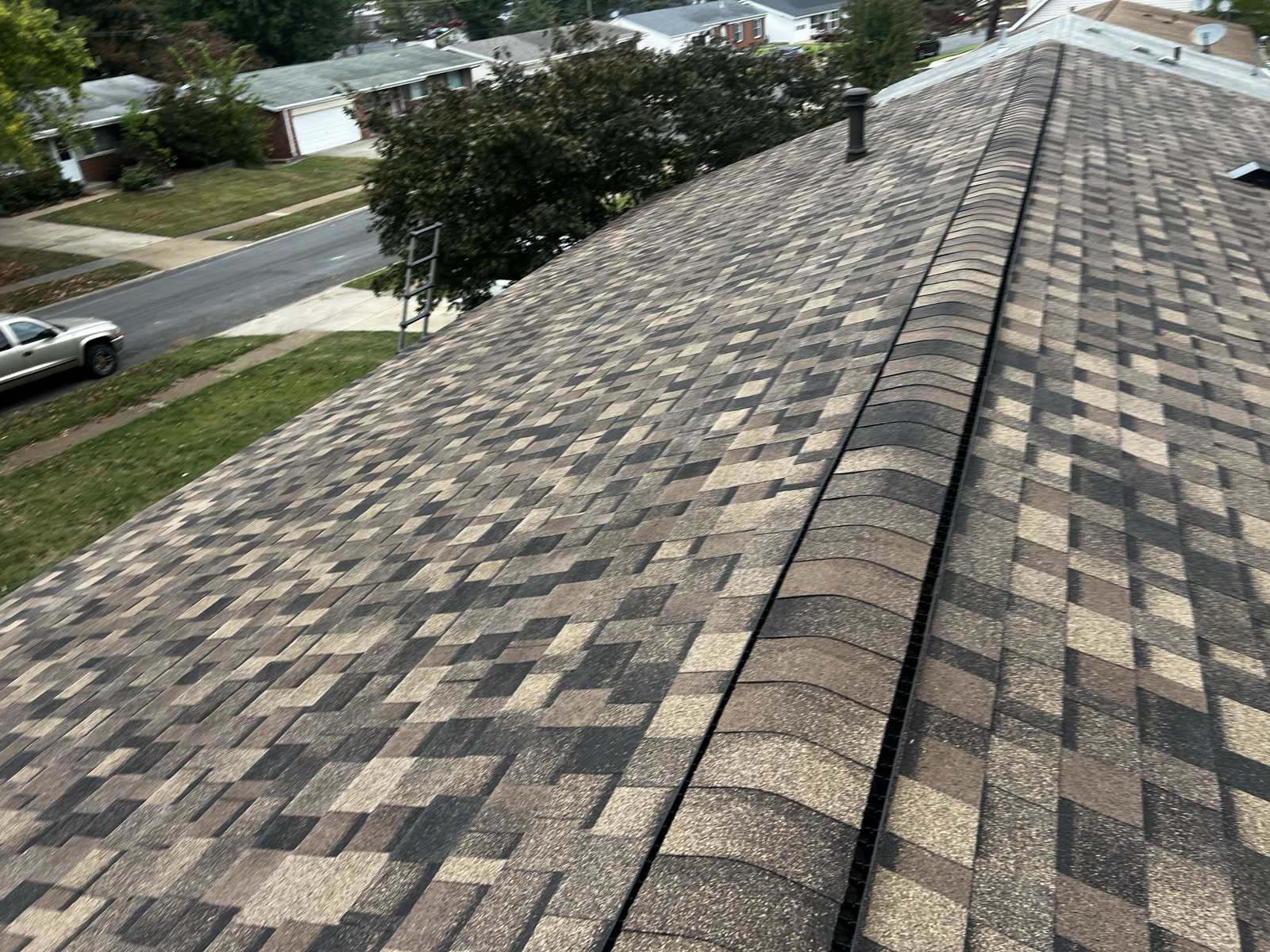
Asphalt roofs in this climate work hard. Real summer heat, real winter cold, a great many freeze and thaw crossings, and it is that thermal cycling rather than any single event that ages a shingle. Somewhere past the middle of a roof's life it becomes worth knowing exactly where you are, and if you bought the house with the roof already on it you almost certainly do not. One walk settles it, and settles it in writing, and the answer is very often that you have years in hand.
The output that matters here is not a verdict. It is a condition record and a rough sense of how many years you are working with, so that a roof becomes something you plan for rather than something that happens to you in February.
In the weeks after a storm that you know was overhead
Not the same day. The day of, and the two or three days after, are when the street fills up with people knocking, and it is the worst possible moment to be making decisions. Wait until it has gone quiet, then call somebody you chose rather than somebody who chose you.
Before that, do the one thing that costs nothing: take the ground level photograph set as soon as it is safe. Same corners, same order, as described on the photograph set. That record is worth having whether or not anything turns out to be wrong.
When you are buying or selling
A general home inspection includes the roof, and a general home inspector is not a roofer. They are usually working from the ground or from a ladder at the eave, they are covering an entire house in a few hours, and their report will very often say that the roof appears to be near the end of its service life and recommend evaluation by a roofing contractor. That sentence is where a lot of sales get stuck.
Getting a roofing specific inspection, with photographs and a written scope, moves that from a vague sentence into a described condition with quantities attached. That is useful whichever side of the transaction you are on, and it is useful before the negotiation rather than during it.
Before winter, if the flashings have never been looked at
Flashing failures announce themselves in the worst month. A chimney counter flashing that has been surface sealed with caulk rather than let into the mortar joint will get through several summers and then let go during a freeze and thaw run in January or February, when getting anybody onto a roof is difficult and when the interior damage happens fast.
Looking at the flashings and the pipe boots in autumn is a small piece of work with an unglamorous payoff, which is why nobody advertises it. It is also, on older houses in this metro, the single most likely thing to be wrong.
What the record says about this metro
Neighbouring counties over the same six years: St. Charles 54 logged reports, Jefferson 44, Franklin 30.
Those county figures count reports that somebody logged, not insured losses, and reporting density follows population. They describe the metro, not your address. The only thing that describes your address is somebody standing on it, which takes about an hour.
The one that everybody in this metro remembers
On 16 May 2025 an EF3 tornado tracked across the St. Louis area. The National Weather Service rated it at 152 mph, beginning near Clayton at 2:41pm, with a path 22.6 miles long and a maximum width of 1.8 miles, which made it the widest tornado in this region in records that begin in the year 1950. Five people were killed. The damage figure of 1.6 billion dollars comes from NCEI rather than from the Weather Service.
The federal declaration that followed, DR-4877-MO, covered St. Louis City and County, with 9,427 individual assistance approvals, 58.13 million dollars in individual and households programme payments and 105.01 million dollars in public assistance.
Those are real, sourced figures and they are about a region rather than about a roof. If your house was under that track, you already know it. If it was not, the fact that the season was severe statewide is not evidence about your roof, and anybody presenting it as such is arguing from a headline.
One real deadline, and it belongs to the state rather than to us
Missouri created a tax credit at RSMo 135.445 equal to a homestead insurance deductible incurred during 2025, capped at 5,000 dollars, and it is transferable. No new credits are authorised after 15 October 2026, which from today is a matter of weeks.
That is a tax matter and a tax professional is the person to ask whether it reaches you. It is here because it is real, it is running out, and almost nobody writing about roofs in this state has mentioned it at all. Nothing in it changes what a contractor may do, which is set out on the four sentences a legal Missouri roofer never says, and a roofing company may not offer you anything whatever in connection with a deductible.