Free Roof Inspection STL / Output 01
Get it in writing before anybody quotes you a number
At the end of a Keys inspection you hold a description of your roof and, if there is work, a description of the work: areas, pitch, layers, every penetration counted, every flashing named, and what happens if the deck turns out soft. A single figure on a logo sheet is none of those things.
A scope describes work. A price describes nothing.
Ask for the scope in writing and you can do three things you cannot do with a figure: set it beside somebody else's and see whether the two describe the same roof, check afterwards whether what was promised is what happened, and point at a line and ask about it. The document most homeowners in this metro are handed after a free inspection is a single page with a logo, a sentence about damage and a number, which supports none of the three. Keys sends the scope whether there is work on it or not.
A scope is a description. It says what is on the roof now, what is proposed, in what quantity, in what material, and what is excluded. It can be laid beside another scope and read line against line. That is the whole point of it.
What should be on it
- The measurements. Squares of roof area, and how that was arrived at: measured on the roof, or taken from an aerial measurement service. Both are fine. Not saying which is not.
- Tear off, and how many layers. Whether the old material comes off, and how many layers are expected to be under there. This changes the labour and the disposal.
- Decking. What is expected, what will happen if more of it is bad than expected, and the unit rate for replacing it. This is the one line that reliably becomes a conversation later, so it should be settled before anyone starts.
- Underlayment and ice barrier. What goes down, and where the ice barrier stops.
- Flashings. New or reused, itemised by location: chimneys, walls, valleys, apron, step. Reusing step flashing is a real choice and it should be a stated one.
- Penetrations. New pipe boots counted individually, storm collars, and what happens to abandoned fixings.
- Ventilation. What exhaust is going on, what intake exists, and whether the two are being made to agree.
- Shingle, by name. Manufacturer and line. Keys installs Atlas and Malarkey, so it says Atlas or it says Malarkey.
- Clean up and disposal. Skip, magnet sweep, and who is responsible for the lawn.
- Exclusions. What is not in the price. Masonry, carpentry, interior repair, gutters if they are not included.
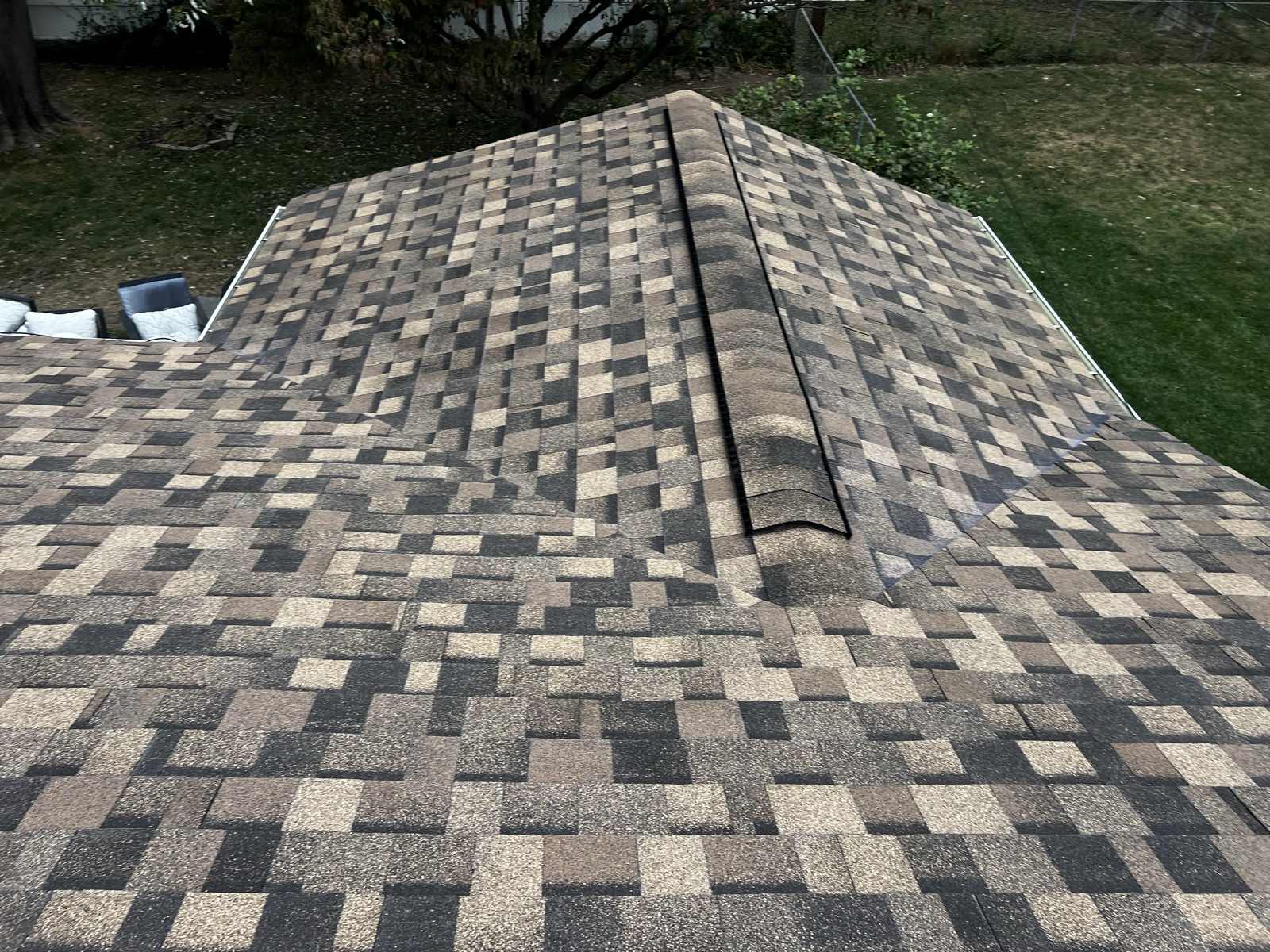
A written all clear is worth having
If the roof is sound, the honest output of an inspection is a short document saying so, with the photographs attached, and a note of anything that is fine now but will not be in a few years. That is not a wasted visit. It is a dated statement of condition, and there are at least four points in the ordinary life of a house where it earns its keep.
- The next person who knocks and tells you your roof is finished now has to argue with a document rather than with your memory.
- After the next storm, you have a before to put beside the after.
- When you sell, you can hand it over, and it removes an inspection contingency argument before it starts.
- When you are planning money, you know roughly how many years you are working with rather than guessing.
Photographs and a written scope, whether or not there is any work to do. If a company will only put something in writing when there is a sale attached, that is worth noticing.
Two scopes, laid beside each other
When there is work to do and you have more than one scope, the useful exercise is not comparing the totals. It is finding the lines that appear on one and not on the other. In this market the lines that go missing are almost always the same ones: new flashings rather than reused, ice barrier extent, the decking rate, pipe boots counted properly, and whether ventilation is being corrected or simply reinstated as it was.
A cheaper number with four missing lines is not cheaper. It is a different job. Once you know which lines are missing you can ask both companies to price the same thing, and at that point the comparison is real.
What you are signing, and when
A quote and an authorisation are different documents and they should never arrive as the same piece of paper. A quote is an offer you can sit with. An authorisation commits you to something. The version of this that causes trouble in this metro is a document signed at the door that reads like a formality and functions as a contract contingent on an insurance outcome.
Read what is above the signature line. If the words on it commit you to using that company in the event of anything at all, it is a contract, whatever it is titled. There is no reason to sign anything on the day of an inspection, and a company that needs you to is telling you something about how it makes its money.
Where it should live
A scope emailed as a PDF and left in an inbox is gone in two years. The version of this that survives is boring: one folder, on whatever cloud drive you already use, with the year in the folder name, holding the scope, the photographs, the invoice if there was work, and a note of who did it and their phone number. It takes ten minutes once.
The photographs are the part that appreciates. That is set out on the photograph set, and what happens after the scope is on after the inspection.